
This page covers the device-specific wiring for a beam sensor (sender + receiver pair). For general input setup and activity settings, see Add input device.
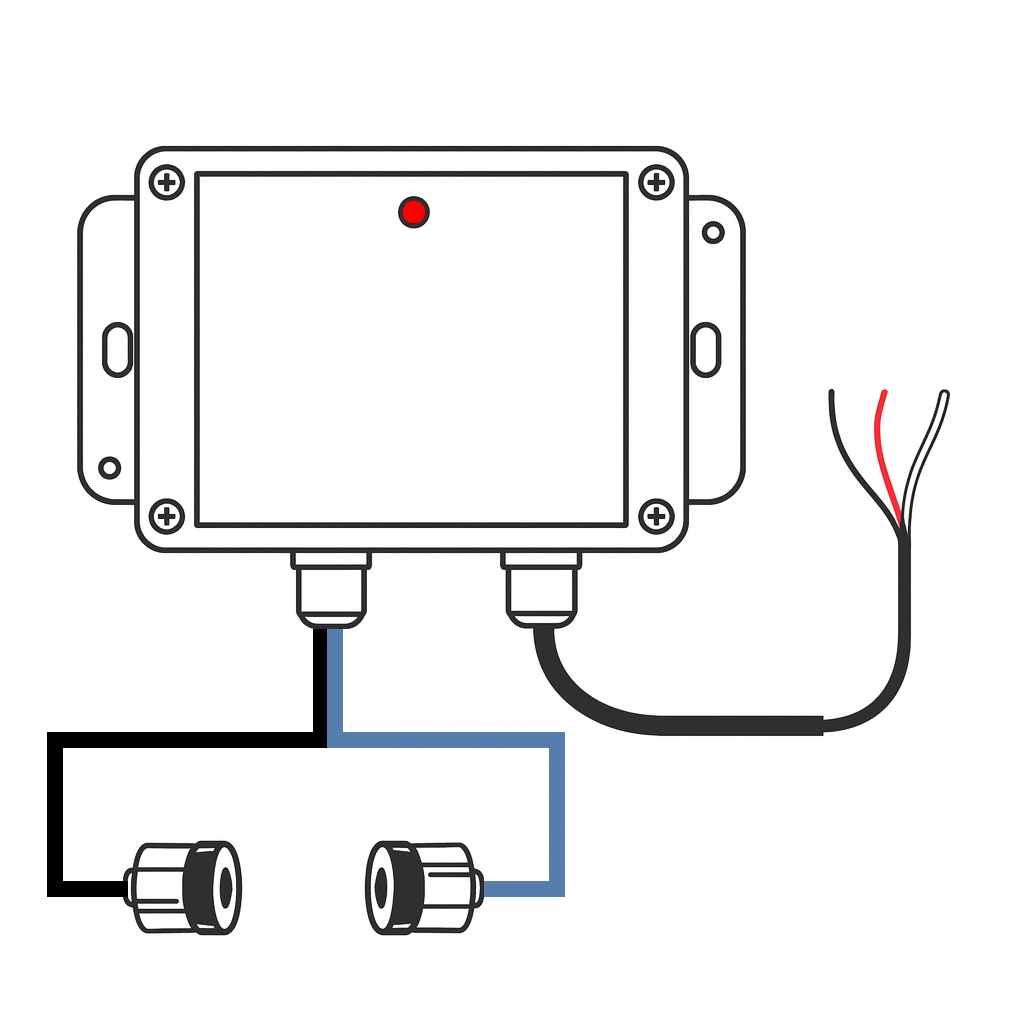
The beam sensor detects when something crosses a beam between a paired sender and receiver. Useful for monitoring intrusion across a defined line — companionways, gangways, dock access, or any space that should remain clear.
Prerequisites
-
Beam sensor sender + receiver pair
-
12–24 V DC unswitched power supply
-
Marine-grade wiring if extending the supplied leads
-
An available BRNKL Blue input channel
Wiring
-
Red wire

-
Black wire

-
White wire → available input channel

If you need to extend the wiring, splice in marine-grade 18 AWG (or larger) wire. Ensure all splices are sealed and rated for the marine environment.
Mount sender and receiver
-
Align the sender and receiver so they face each other directly with a clear line of sight.
-
Maximum separation: 30 ft (≈ 9 m).
-
Secure each unit to prevent misalignment from vibration or movement.
-
During installation, monitor the LED on the sensor enclosure:
-
LED not blinking — beam is intact and aligned.
-
LED blinking — beam is broken (trigger condition).
-
Configure
In BRNKL Device Manager, go to Settings > Inputs, select the input channel the white wire is connected to, and set Input Type to Laser.
Recommended settings
-
Alert When — set to High to alert when the beam is broken.
-
Record on Alert — pair with a camera covering the same area for video context.
Test
-
With the beam unobstructed, confirm the LED is not blinking.
-
Pass an object or person through the beam path. The LED should blink and the BRNKL input channel should register the event.
-
If LED behaviour is inconsistent, fine-tune the alignment between sender and receiver.
Troubleshooting
-
LED stays blinking constantly — check alignment and ensure no obstructions or reflective surfaces are interfering with the beam path.
-
LED never blinks, even when obstructed — verify wiring (power, ground, input) and channel configuration in BRNKL Device Manager.
-
Long-run installations — ensure wiring stays dry, clean, and sealed against corrosion.